
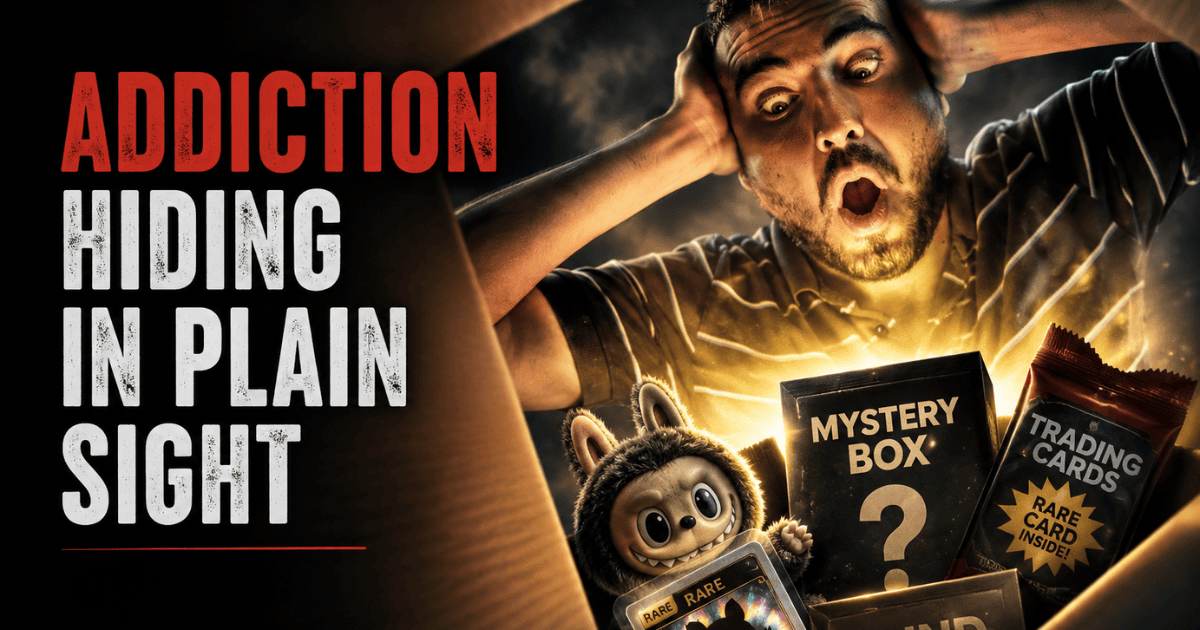
 Hopefully, by now, most people understand the threat gambling addiction can pose to financial success. An occasional lottery ticket purchase or night at the boats may be fairly harmless, but we probably all know someone whose life was seriously damaged when these behaviors got out of control.
Believe it or not, this same addictive formula has quietly made its way out of the casino and into the toy aisle through trading card packs and blind-box collectibles. For those unfamiliar, these products are often marketed primarily to children, though adults are increasingly buying them as well. They are built around the concept of random rewards, where the buyer does not know exactly what they are getting. They become addictive because each purchase creates the hope that the next box, pack, or pull could contain the rare, valuable, or highly desired item.
People are not only buying a toy, a card, or a collectible. They are buying suspense and a quick hit of dopamine. The same emotional trigger that happens when someone pulls the handle on a slot machine can also occur when opening a pack of cards or unboxing a mystery package.
A 2025 study summarized by PubMed found that spending on physical card packs, and mystery toy boxes, was positively correlated with problem gambling. Adding to this crisis are social media and online marketplaces. Unboxing videos, resale success stories, and photos of rare pulls can make people feel like everyone else is winning. But people usually post the exciting success, not the pile of ordinary purchases that came before it. That creates a distorted picture, making the rare outcome feel more common than it really is.
Once people believe they might get something worth far more than they paid, the purchase starts to feel less like shopping and more like speculation. That is where the line gets blurry. A person may tell themselves, “I’m not wasting money; I might actually make money.” But that is the same logic that keeps many people chasing lottery tickets or casino jackpots.
The Labubu craze is a prime example of one of these products becoming an out-of-control craze. These small plush dolls created the perfect storm of blind boxes, scarcity, celebrity endorsements, social media, resale markets, and fashion status.
Because demand drastically outpaced supply, items regularly sold out in seconds. While original blind boxes cost around $13 to $30, rare “secret” editions resold for hundreds or even thousands of dollars on secondary markets. The toy’s maker, Pop Mart, experienced explosive revenue growth, turning the company into a billion-dollar empire with a skyrocketing stock price. The obsession reached its height in June of last year, when a one-of-a-kind Labubu sold for over $150,000 at an art toy auction in Beijing, with the entire 48-lot auction bringing in more than half a million dollars.
Collecting can be fun, harmless, nostalgic, and even social. The problem begins when someone keeps buying after they planned to stop, hides what they spent, feels guilty afterward, uses credit cards to chase rare items, or starts seeing every purchase as a chance to “win back” what they already spent.
The National Council on Problem Gambling defines problem gambling as behavior that damages a person or family and disrupts daily life or work, which is a useful standard to borrow when discussing obsessive buying behaviors as well.
The lesson is that when buying becomes chasing, and the enjoyment of the hobby begins to feel more like work, it is time to slow down and ask whether you really want the product itself or simply the feeling you get when you open it.
(Past performance is no guarantee of future results. The advice is general in nature and not intended for specific situations)