
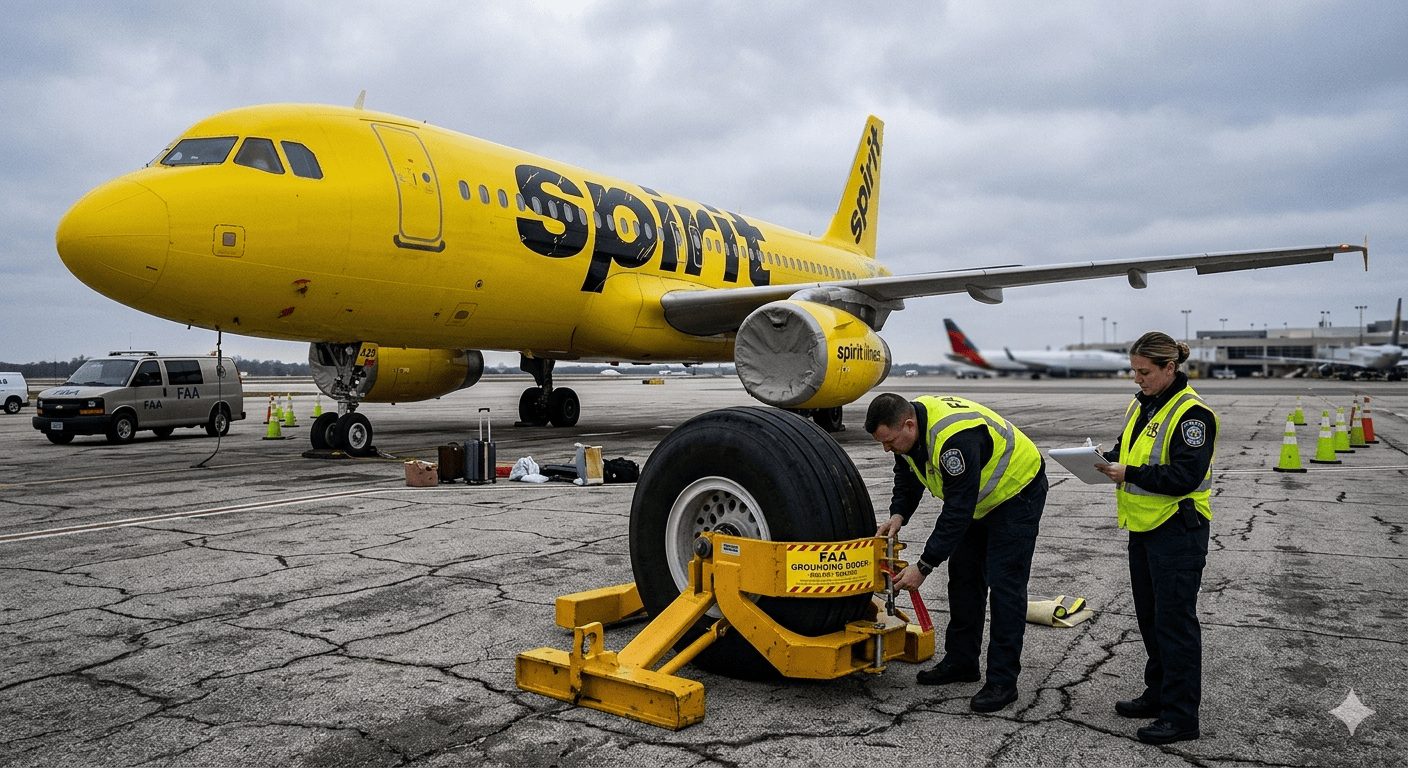
 This summer, my family and I have a trip planned to California. Being budget-conscious, we had intended to fly with Spirit Airlines. However, following Spirit’s surprise announcement this past weekend that it is immediately shuttering operations, we are now searching for an alternative carrier.
While it was a shock to me, this closure did not come as a total surprise to Wall Street. Spirit’s financial struggles were well-documented and building for years; in fact, its share value plummeted roughly 98% between May 2024 and late 2025 alone. The airline’s path to insolvency was marked by a series of failed lifelines. In early 2022, Frontier Airlines entered talks to acquire Spirit. When that deal collapsed, JetBlue Airways stepped in with a $3.8 billion purchase agreement in July of that year.
That merger ultimately never came to fruition. The U.S. Department of Justice, under Attorney General Merrick Garland, filed suit to block the deal on antitrust grounds. Secretary of Transportation Pete Buttigieg supported these efforts, arguing the move was necessary to preserve competition and maintain low-cost options. After the courts ruled in favor of the Justice Department in early 2024, Spirit attempted to restructure through multiple bankruptcy filings. Ultimately, rising operational costs, most notably the recent spike in energy prices, led to Saturday morning’s final shutdown.
While I sympathize with the thousands of employees now out of work, as a capitalist, I believe there are times when companies should go out of business. This is not just a natural outcome of a free market; it is essential to a healthy economy. When businesses with unsustainable models fail, they are replaced by stronger, more efficient ones. In this case, JetBlue and Spirit attempted to evolve to survive, but the government prevented them from doing so.
We will never know if a JetBlue-Spirit merger would have succeeded. It is possible the combined entity would have failed anyway, resulting in two closures instead of one. Conversely, a larger, more resilient airline might have captured enough market share to remain a viable low-cost alternative to the “Big Four” carriers.
The broader lesson I take from this story is that central planners in Washington are not good at micromanaging market systems. Whether driven by misplaced good intentions or the influence of lobbying interests, their intervention often does more harm than good. Regardless of the specific cause of Spirit’s exit, the consumer is ultimately who is harmed.
The tangible cost of this market exit is already coming into focus. Data from aviation analytics firm Cirium reveals that when Spirit departs a market, average round-trip fares typically jump by 23%, or roughly $60. With this exit now occurring on a nationwide scale, there is every reason to believe consumers will face a significantly more expensive travel landscape.
Unfortunately, the removal of this low-cost disruptor paves the way for higher profit margins for the remaining carriers, and will ultimately leave travelers with fewer choices and a much steeper bill for their summer plans.
(Past performance is no guarantee of future results. The advice is general in nature and not intended for specific situations)